

The Hidden Power of Construction Site Planning: Why It Determines 80% of Project Success
- Princefix Construction Ltd
- Dec 9, 2025
- 3 min read

In the construction industry, many people celebrate the visible—towering structures, beautiful finishes, smooth pavements, tiles perfectly lined, or architectural designs that leave a lasting impression. But behind every successful project lies a less glamorous hero: site planning.
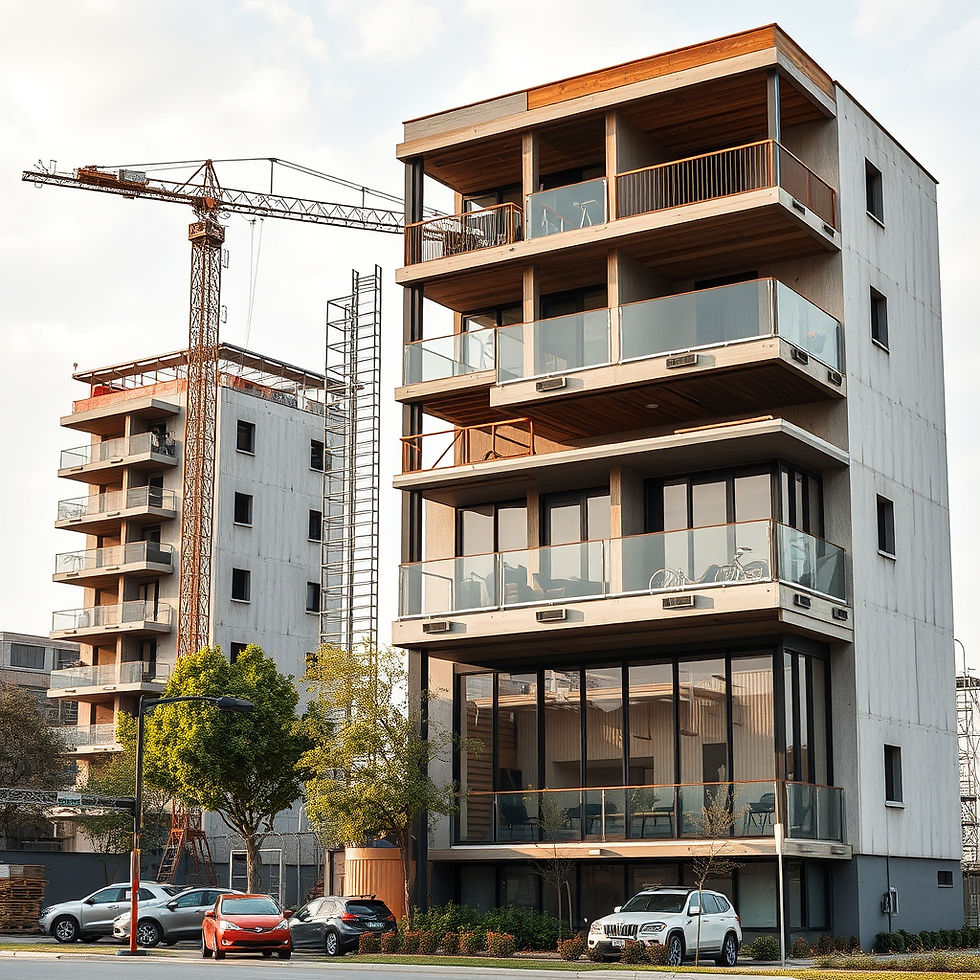
As builders, architects, and contractors, we often focus on technical execution. Yet, the truth remains unshakable: How you plan the site determines how you perform on the ground. In fact, industry research and real-world experience show that up to 80% of project efficiency and safety is shaped before the first shovel hits the soil.
This is not just a theory—it is a reality we witness daily across Ghana and beyond.
1. Why Site Planning Is the Brain of Every Construction Project
A construction site is more than a physical location.It is a living system.It breathes, moves, shifts, and reacts to every decision you make.
Site planning ensures that this system functions smoothly by:
✔ Organizing movement of materials
Material delays are one of the biggest causes of project slowdown. A well-planned site identifies the best delivery points, storage zones, and access routes to avoid congestion and wastage.
✔ Positioning equipment for maximum efficiency
Cranes, mixers, trucks, scaffolding, water points, electricity—every position matters. A wrong placement can cost hours or even days.
✔ Ensuring safety and compliance
When site planning is poor, hazards multiply.When it is done right, accidents drop drastically.
✔ Setting a clear workflow
From excavation to roofing, every stage is connected. Proper planning ensures one activity doesn’t block another.
2. The Hidden Costs of Poor Site Planning
Most project overruns are not caused by “big mistakes.”They come from small inefficiencies repeated daily:
• Workers carrying materials long distances• Confusing site access• Poor storage leading to damaged materials• Too many machines working in one corner• Lack of emergency exit routes• Unclear supervision zones• Unplanned drainage causing flooding during rain• Clashes between subcontractors
These micro-delays stack up, eventually becoming expensive problems.
Poor site planning doesn't show up on drawings—but you will feel it in your budget, your schedule, and your stress.
3. Modern Site Planning Goes Beyond Layout — It Includes Intelligence
Today, site planning is no longer just about marking spaces.It has evolved into a strategic, data-driven process that includes:
a. Risk Mapping
Identifying dangerous zones (edge heights, deep excavations, machinery paths).
b. Workflow Simulation
Visualizing how workers and materials move hour by hour.
c. Environmental Assessment
Sun direction, wind, water flow, soil behavior.
d. SMART Logistics
Scheduling deliveries and movements to avoid congestion and reduce waste.
e. Digital Monitoring
Using drones, cameras, and digital maps to track progress and adjust site flow in real time.
This is the future—and it is already here.
4. Why Ghana and Africa Need Stronger Site Planning Culture

Many African construction companies have the technical skill to build world-class structures.What slows us down is not our creativity or capability—it is our planning culture.
Common industry challenges include:
Improvised site layouts
Limited logistics planning
Unstructured workflow
Weak documentation
Delayed decision-making
Low emphasis on safety planning
If we strengthen site planning, project quality will rise, accidents will fall, and timelines will improve across the entire industry.
This is where companies that prioritize planning stand out.
5. What Excellent Site Planning Looks Like (Practical Example)
• A clear site map at the entrance• Demarcated movement zones for workers and machines• Properly arranged material storage areas• Effective waste management points• Defined emergency routes• Safety stations in visible corners• Scheduled delivery times to avoid traffic• Organized work sequencing• Effective communication structure among supervisors
This is not luck.This is deliberate planning.
6. The Competitive Advantage for Construction Firms
Companies that invest in site planning enjoy:
✔ Faster delivery timelines✔ Reduced waste✔ Lower material loss✔ Safer work environments✔ Better subcontractor coordination✔ Higher client satisfaction✔ Stronger brand reputation
For companies expanding into real estate development, property management, and commercial construction—strong site planning becomes even more essential.
It’s no longer optional.It’s a competitive advantage.
7. Final Thoughts: Planning Is Not an Expense — It’s an Investment
Every successful project begins long before workers show up.It begins with:
A thoughtful approach
A structured site layout
Clear workflows
Risk awareness
Team alignment
The more we invest in planning, the less we spend fixing mistakes.
For builders, architects, supervisors, and construction entrepreneurs, embracing professional site planning is one of the best decisions you can make.
Because in construction, great results don’t happen by accident — they happen by design.


Comments